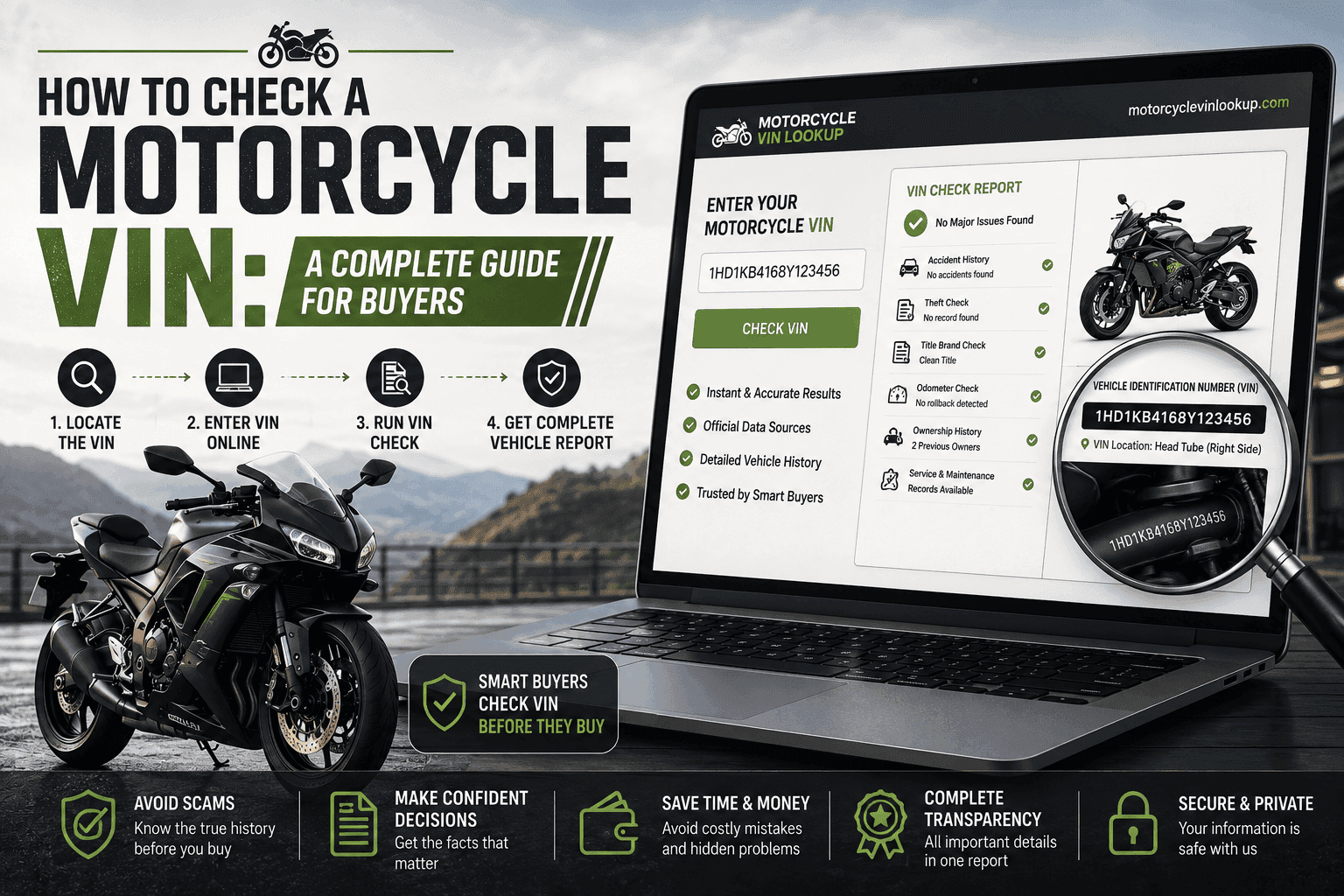
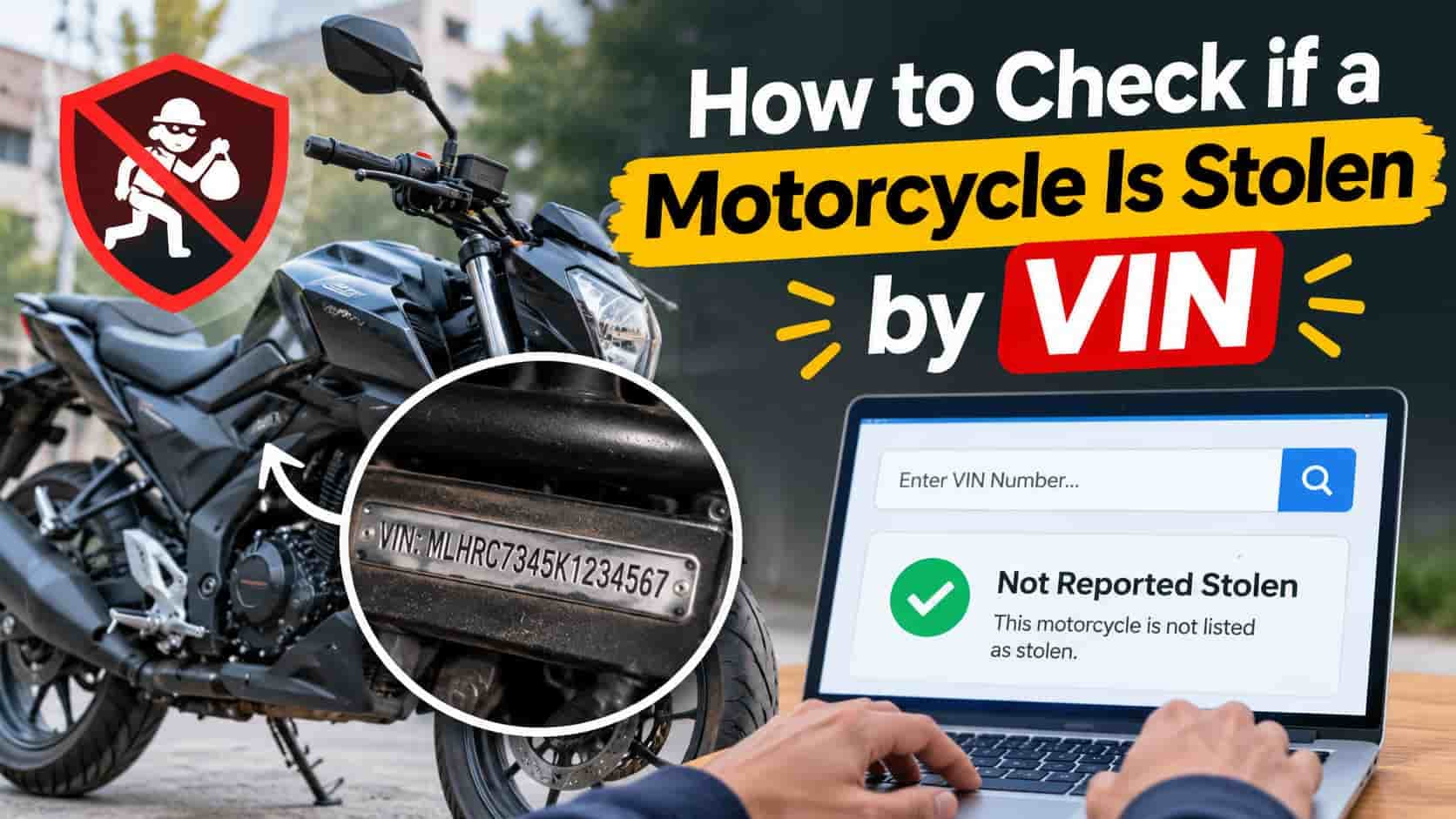
Knowing how to check if a motorcycle is stolen can help you avoid buying a bike with serious legal or ownership problems. Looking up the motorcycle VIN number is a useful first step.
A stolen motorcycle can look clean, run well, and even come with paperwork. That is why running a motorcycle VIN lookup before buying is so important.
The VIN helps connect the motorcycle to records that may reveal theft, title, registration, or other history concerns.
What Is a Motorcycle VIN Number?
A motorcycle VIN is a unique identification number assigned to the bike by its manufacturer. Most modern motorcycles use a 17-character VIN.
It can help identify the motorcycle's:
- Manufacturer
- Model
- Model year
- Engine information
- Trim
- Transmission
- Vehicle type
- Country of manufacture
The VIN is also used by government agencies, insurers, dealerships, and other organisations to identify a specific motorcycle. This makes it useful when checking a motorcycle's history before buying.
Can a VIN Tell You if a Motorcycle Is Stolen?
A VIN can help you identify whether a motorcycle has been reported stolen when theft information is available in the records being searched. However, a VIN lookup is not a guarantee that a motorcycle is legally clear.
A motorcycle could have been stolen recently and not yet appear in a database. Records can also vary by state, country, agency, and reporting system. For this reason, a motorcycle VIN check should be one part of your buying process.
You should also verify the title, registration, seller's identity, and physical VIN.
How to check if a motorcycle is stolen for free
To check if a motorcycle is stolen for free, find the motorcycle’s 17-digit VIN, usually stamped on the frame near the steering head. Make sure the number matches the title and registration documents before checking it.
Search the VIN through the National Insurance Crime Bureau’s VINCheck service or contact local law enforcement for a manual lookup.
While you can use this service for free, it doesn’t reveal other hidden issues with used motorcycles, including accidents, title brands, lien status, and more. You will need to pay on a third-party provider website to get the full motorcycle history report.
Why Check a Motorcycle VIN Before Buying?
A motorcycle can have problems that are not obvious during a test ride. For example, the bike could have:
- A theft record
- A branded title
- Salvage history
- Insurance loss records
- Mileage problems
- Accident records
- Previous registration issues
- VIN discrepancies
A motorcycle VIN lookup can help disclose some of these warning signs before you hand over your money. This is especially important when buying from a private seller.
How to Tell if a Motorcycle Is Stolen by VIN
Start by finding the complete VIN on the motorcycle. The location can vary by manufacturer and model, but it is often found around the steering head or frame.
You may also find the VIN on:
- Title documents
- Registration
- Insurance paperwork
- Manufacturer documentation
1. Compare the VIN With the Motorcycle
Before running a lookup, compare the VIN on the bike with the VIN on the paperwork. Every character should match.
Pay close attention to:
- Letters
- Numbers
- Missing characters
- Scratched areas
- Unusual fonts
- Signs of alteration
A mismatch deserves further investigation. Do not assume it is simply a paperwork mistake.
2. Run a Motorcycle VIN Lookup to Get the Bike History Report
Enter the VIN into a motorcycle VIN lookup service that provides history information. Depending on the available data, the report may show:
- Theft records
- Title records
- Salvage records
- Accident records
- Insurance records
- Mileage information
- Registration events
3. Look Out for Theft Records in the Report
The most important section to review is the theft information. Look for records indicating that the motorcycle was:
- Reported stolen
- Listed as stolen
- Recovered after theft
- Associated with a theft claim
A theft record is a major warning sign. If a report shows an active theft record, do not proceed with the purchase until the matter is properly resolved with the relevant authorities.
4. Check the Registration History
Registration records can provide another useful clue. Compare the seller's information with the available registration history.
Look for unusual changes involving:
- States
- Ownership
- Dates
- Mileage
- Vehicle description
A motorcycle that has moved between several states is not automatically suspicious. However, unexplained inconsistencies should encourage you to investigate further.
5. Review the Documents Provided by the Seller
Ask to see the motorcycle's title and registration, and check for the following:
- The seller's name matches the title
- The VIN matches the motorcycle
- The vehicle description matches the bike
- The title appears complete
- There are no unexplained alterations
If the seller refuses to provide basic ownership documents, consider walking away.
READ ALSO: How to Check a Motorcycle VIN (MVL)
Warning Signs That a Motorcycle May Be Stolen
A stolen motorcycle does not always come with obvious clues. However, several warning signs should make you stop and investigate.
The VIN Does Not Match
The VIN on the motorcycle should match the VIN on the title and registration. If they do not match, do not ignore the difference.
The VIN Looks Altered
Look closely at the VIN area. Warning signs can include:
- Scratches
- Grinding marks
- Fresh paint
- Damaged characters
- Uneven markings
- Signs of tampering
The Seller Has No Title
A missing title does not automatically prove a motorcycle is stolen. There can be legitimate reasons for missing paperwork. However, buying a motorcycle without proper ownership documentation creates additional risk.
Ask the seller to explain why the title is missing and verify the situation with the appropriate motor vehicle agency.
The Price Is Extremely Low
A very low price can be attractive. It can also be a warning sign. Compare the motorcycle with similar bikes in your local market. If the price is far below similar motorcycles without a clear reason, investigate further.
The Seller Wants Cash Only
Cash is not proof of illegal activity. However, a seller who refuses normal documentation, avoids written agreements, or pressures you to pay immediately should raise concerns. Take your time.
The Seller Avoids VIN Checks
A legitimate seller should generally understand why a buyer wants to verify the motorcycle. If someone refuses to let you check the VIN, consider that a major warning sign.
What to do if the Report Shows a Stolen Motorcycle
Take the result seriously. Do not attempt to negotiate a lower price or buy the motorcycle anyway.
This is what to do, and do not delay:
- Stop the transaction.
- Keep copies of the available documents.
- Do not alter or move the motorcycle unnecessarily.
- Contact the appropriate law enforcement or motor vehicle authority.
- Explain what the VIN check revealed.
A stolen motorcycle may legally belong to someone other than the person selling it. Even if you did not know the motorcycle was stolen, you could still face serious problems if you purchase it.
What If the Motorcycle Was Reported Stolen but Recovered?
This situation is different from an active theft record. A motorcycle can be reported stolen and later recovered. The VIN history may still show the theft event.
In this case, you should check:
- When it was stolen
- When it was recovered
- Whether it suffered damage
- Whether the title was branded
- Whether an insurance company handled the loss
- Whether the current title is valid
A recovered motorcycle is not automatically unsafe or impossible to buy. But you should understand its complete history before making a decision.
Can a Motorcycle VIN Lookup Guarantee a Clean Motorcycle?
No. This is one of the most important things to understand. A bike VIN lookup is a research tool, not a legal guarantee. There can be delays between a theft being reported and the record appearing in a database.
For this reason, use multiple checks when buying a motorcycle, including a VIN check, VIN inspection, title verification, seller verification, and physical inspection.
Check the Physical VIN Carefully
A motorcycle VIN check should not stop at an online report. Inspect the physical VIN on the motorcycle.
The VIN should be clearly visible and consistent with the paperwork. If something looks unusual, do not assume the motorcycle is legitimate. Ask a qualified professional or the appropriate authority to inspect it.
Be on the Lookout for VIN Cloning
VIN cloning occurs when a stolen or problematic vehicle is associated with the VIN of another legitimate vehicle. This can make a stolen motorcycle appear legitimate on paper.
That is why matching the VIN is only one part of the process. You should also compare the motorcycle's make, model, color, engine, frame information, and equipment with the information associated with the VIN.
If the records describe a motorcycle that does not match the bike in front of you, stop the transaction.
Check the Motorcycle's History Before Paying
Do not wait until after buying the motorcycle to run a vehicle history check. You need to do this before sending a deposit or handing over payment, especially when purchasing online.
A seller may send photographs that make the motorcycle appear legitimate. However, photographs cannot confirm ownership or a clean history, but the VIN gives you a better starting point.
What Other Information Can a Motorcycle VIN Lookup Reveal?
A theft check is only one reason to get the full motorcycle VIN report. Depending on the available records, you may also discover information about:
Ownership Records
Know how many owners have owned the motorcycle, the duration of ownership, and locations. This helps you gauge how the bike has been cared for.
Registration History
Registration events can help you understand where and when the motorcycle was previously registered.
Accident History
Previous accidents can affect safety, appearance, and value. A motorcycle that looks good today may have suffered major damage in the past.
Salvage or Branded Title
A branded title can significantly affect a motorcycle's value and insurability. Always understand what the title brand means in your state.
Mileage Records
Mileage information can help you identify possible inconsistencies. For example, the current odometer may show fewer miles than an earlier recorded mileage event.
Insurance Loss Records
Insurance records may reveal motorcycles that were declared a total loss. This can provide important information that is not obvious during a visual inspection.
Lien Records
Be aware of any outstanding debt on the bike. This ensures someone’s debt doesn’t become yours.
Auction & Sales Records
Verify if the bike has been sold at auction before, and get any sales information from private sellers, including about ten photos revealing the condition during sales.
Conclusion on How to Check if a Motorcycle is Stolen
Checking if a motorcycle is stolen can protect you from a serious and expensive mistake. A motorcycle may look perfect while its ownership history tells a very different story.
Run a motorcycle VIN lookup, review theft and title information, and compare the results with the physical motorcycle and its paperwork. Pay close attention to VIN tampering, missing documents, unexplained ownership issues, and prices that seem too good to be true.
Remember that no single database can guarantee that a motorcycle is completely free of theft issues. Use the VIN check as one important part of your buying process.
FAQs About Identifying Stolen Motorcycles
How can I tell if a motorcycle is stolen by VIN?
Run a motorcycle VIN lookup and review available theft records. Then compare the VIN with the motorcycle, title, and registration before buying.
How can I tell if a motorcycle is stolen by VIN?
Yes. A motorcycle VIN check can help identify theft records when the relevant information is available in the databases being searched.
What if the VIN report shows a clean motorcycle?
A clean result is encouraging, but it is not a guarantee. Also verify the physical VIN, title, registration, and seller's ownership.
Can a stolen motorcycle have a clean title?
Yes, a stolen motorcycle can temporarily appear to have a clean title. If the theft has not yet been reported or recorded, the original title may still show no issues. Thieves may also use fraudulent titles or title washing to hide a motorcycle’s history and make it appear legally owned.
What should I do if a VIN check shows a stolen motorcycle?
Do not buy it. Stop the transaction and contact the appropriate law enforcement or motor vehicle authority to report the result and seek guidance.
Can a motorcycle VIN check show more than theft?
Yes. Depending on the available records, a full vehicle history report may also show title brands, accidents, insurance losses, mileage records, lien status, auction records, sales history, registration events, and specifications.