
How to Check a Motorcycle VIN: A Complete Guide for Buyers
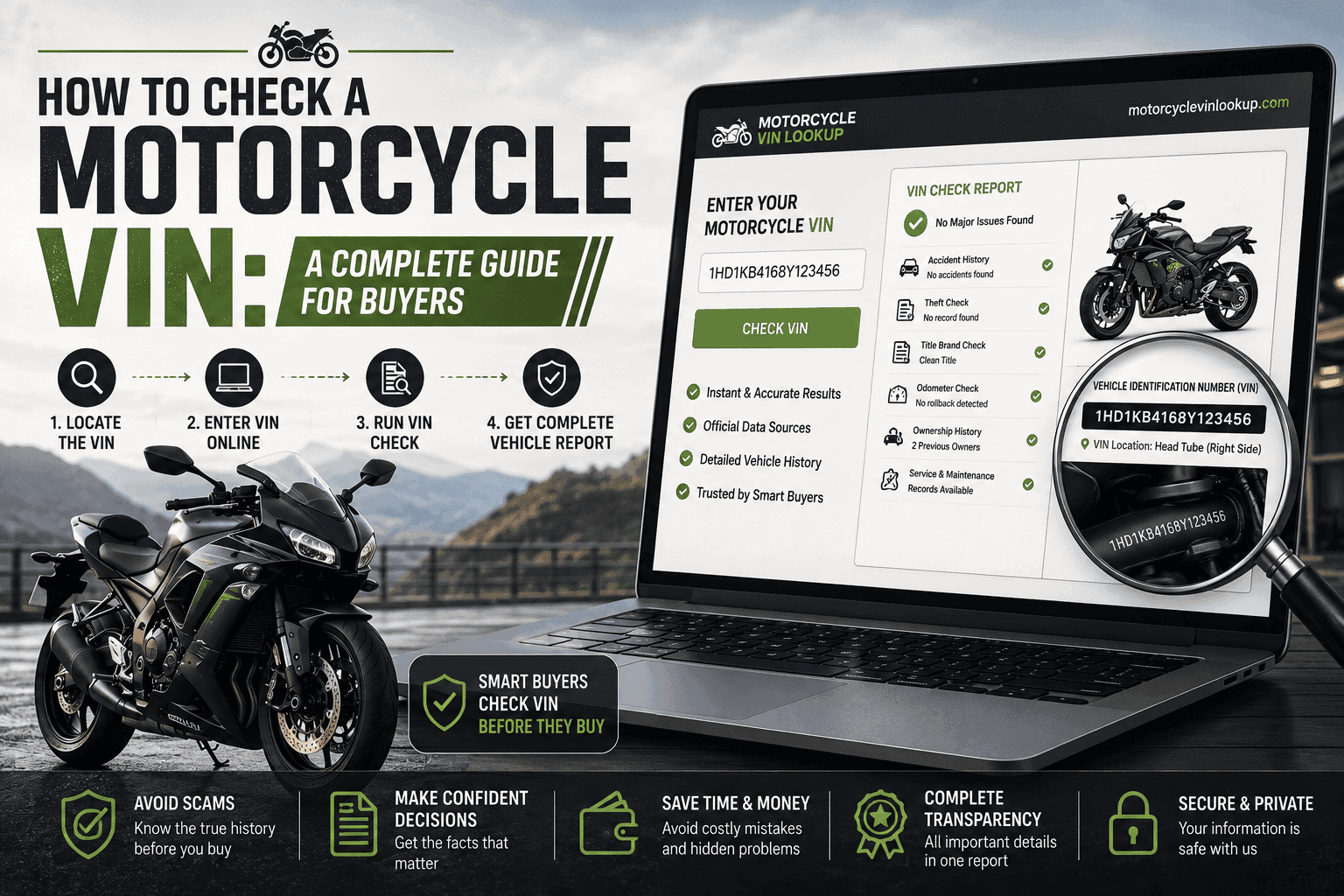
Buying a used motorcycle can save you money, but it also comes with risks. A bike may have hidden damage, a salvage title, an incorrect mileage reading, or even a theft record. The best way to learn more about a motorcycle before you buy is by checking its VIN(Vehicle Identification Number).
A motorcycle VIN check helps you verify the bike's identity, review its history, and confirm important specifications. Whether you are buying your first motorcycle, selling one, or simply want to learn more about your bike, a VIN lookup gives you valuable information in minutes.
In this guide, you will learn what a motorcycle VIN is, why it matters, how to find it, and how to perform a VIN lookup.
What Is a Motorcycle VIN Number?
A Motorcycle Vehicle Identification Number (VIN) is a unique 17-character code assigned to every motorcycle manufactured for sale since 1981. Think of it as the motorcycle's fingerprint. No two motorcycles share the same VIN.
The VIN contains information about the motorcycle's manufacturer, model, engine, production year, assembly plant, and serial number. Manufacturers use VINs to identify motorcycles throughout their lifetime. Government agencies, insurance companies, repair shops, dealerships, and buyers also rely on VINs to verify motorcycle information.
If a motorcycle has a VIN that appears altered, missing, or does not match its documents, it could be a warning sign of theft or fraud.
Why Should You Check a Motorcycle VIN?
A VIN check provides much more than the motorcycle's basic specifications. It can reveal valuable details that help you make a smart buying decision.
Here are the main reasons to perform a motorcycle VIN lookup.
Verify the Motorcycle's Identity
Some motorcycles are advertised with the wrong model year, trim, or engine size. A motorcycle VIN lookup confirms the motorcycle's original factory information so you know exactly what you are buying. This is especially important for motorcycles with custom paint, aftermarket parts, or modified engines.
Check for Theft Records
Motorcycle theft remains a serious problem in many countries. According to the National Insurance Crime Bureau (NICB), motorcycles are stolen every year, and many are later resold without buyers realizing they were stolen.
A VIN check may help identify whether a motorcycle has been reported stolen or has theft-related records available through supported databases. Checking before buying could save you from purchasing a stolen motorcycle.
Look for Accident History
Not every seller tells the full story. A motorcycle may have been involved in one or more accidents before being repaired and offered for sale. A VIN history report may reveal:
- Reported accidents
- Damage records
- Insurance claims
- Repair history
Knowing about previous damage helps you better understand the motorcycle's condition.
Detect Salvage or Rebuilt Titles
Insurance companies may declare motorcycles a total loss after severe accidents, floods, fires, or other major events. A bike VIN lookup helps identify these title brands when records are available, allowing buyers to avoid unexpected problems. These motorcycles often receive branded titles such as:
- Salvage
- Rebuilt
- Junk
- Flood
Verify Mileage Records
Motorcycle odometers can sometimes be replaced or tampered with. A VIN history report may include recorded mileage from inspections, title transfers, service visits, or registration events. Comparing these records can help identify possible mileage inconsistencies.
Confirm Factory Specifications
A VIN lookup also confirms how the motorcycle left the factory, providing details that help buyers verify that the motorcycle matches the seller's description. Depending on the available records, you may see:
- Manufacturer
- Model
- Year
- Engine size
- Fuel type
- Transmission
- Body style
- Trim level
- Manufacturing plant
Where Can You Find a Motorcycle VIN?
Before performing a VIN lookup, you need the motorcycle's VIN. Common locations include:
- The steering head or steering neck
- The motorcycle frame
- Near the front forks
- Under the seat on some models
- Registration documents
- Insurance paperwork
- Vehicle title
Always compare the VIN on the motorcycle with the VIN listed on the title and registration. They should match exactly.
Can You Check a Motorcycle VIN for Free?
Yes, some VIN lookup tools provide free basic information. A free VIN check may include the manufacturer, model, model year, engine type, and other factory specifications.
However, if you need detailed records such as accident history, title brands, theft records, auction history, mileage records, recalls, liens, or ownership history, you will typically need a detailed motorcycle VIN history report.
A full report gives buyers and sellers a much clearer picture of the motorcycle's past and can help prevent costly mistakes.
How to Decode a Motorcycle VIN
Every motorcycle built after 1981 has a 17-character VIN. Each letter and number has a meaning. Together, they tell the story of how the motorcycle was built. Learning to read a VIN can help you verify important details before you buy, sell, or restore a motorcycle.
The Three Main Sections of a Motorcycle VIN
A motorcycle VIN has three sections:
- World Manufacturer Identifier (WMI) – Characters 1–3
- Vehicle Descriptor Section (VDS) – Characters 4–9
- Vehicle Identifier Section (VIS) – Characters 10–17
Each section provides different information about the motorcycle.
World Manufacturer Identifier (Characters 1–3)
The first three characters identify the manufacturer and the country where the motorcycle was built. For example, these characters can tell you if the motorcycle was made by Honda, Yamaha, Harley-Davidson, Kawasaki, BMW, Ducati, Suzuki, KTM, Triumph, or another manufacturer.
Matching this information with the seller's description helps confirm the motorcycle's identity.
Vehicle Descriptor Section (Characters 4–9)
The next six characters describe the motorcycle's main features. The ninth character is called the check digit. It helps verify that the VIN is valid and has not been entered incorrectly
Depending on the manufacturer, they may identify:
- Model
- Engine type
- Body style
- Series
- Trim level
- Engine size
- Safety equipment
Vehicle Identifier Section (Characters 10–17)
The last eight characters identify the individual motorcycle. No two motorcycles share the same production number, making every VIN unique. They include:
- Model year
- Assembly plant
- Production sequence number
What Information Can a Motorcycle VIN Lookup Reveal?
A VIN lookup provides many valuable details about the motorcycle's past, including the following:
Factory Specifications
A VIN lookup confirms how the motorcycle left the factory. This information helps buyers confirm they are purchasing the correct motorcycle. It may include:
- Year, make, model
- Engine size
- Fuel system
- Transmission
- Body style
- Trim
- Manufacturing plant
Vehicle History Records
A detailed motorcycle VIN report may include important historical records collected throughout the motorcycle's life. Having access to these records can help buyers avoid motorcycles with hidden problems.
These records may include:
- Accident history
- Salvage records
- Rebuilt title records
- Flood damage
- Fire damage
- Stolen records
- Odometer readings
- Ownership history
- Auction & sales history
- Lien records
- Service and maintenance records
- Open safety recalls
Who Should Perform a Motorcycle VIN Check?
A motorcycle VIN lookup is useful for more than just buyers. Many different people rely on VIN information every day.
Used Motorcycle Buyers
Buyers can easily verify the specs and records of theft, accidents, title brands, and more. This helps reduce the risk of purchasing a motorcycle with hidden issues.
Motorcycle Sellers
Providing a VIN report builds trust with potential buyers. It shows that the seller is open about the motorcycle's history and factory specifications. Buyers often feel more confident when important information is verified before the sale.
Dealers
Dealerships use VIN lookups to inspect trade-ins, confirm specifications, and accurately describe motorcycles offered for sale. This helps reduce listing errors and improves customer confidence.
Insurance Companies
Insurance providers use VIN information to identify motorcycles and confirm factory specifications. This helps calculate coverage and process claims more accurately.
Repair Shops
Repair technicians use VIN data to identify the correct engine, transmission, and factory equipment before ordering replacement parts. This reduces the chance of installing incompatible components.
Motorcycle Collectors
Collectors often look for motorcycles with original factory equipment. A VIN lookup helps verify production details and supports restoration projects by confirming how the motorcycle was originally built.
Common Mistakes Used Bike Buyers Make
Buying a motorcycle without checking the VIN can lead to expensive surprises. Avoid these common mistakes before making a purchase.
Trusting the Seller Without Verification
Most sellers are honest, but mistakes can happen. Always verify the motorcycle's specifications and history using the VIN instead of relying only on the advertisement.
Skipping the Vehicle History Report
A motorcycle may look clean on the outside but still have a hidden past. A vehicle history report can reveal accident records, title brands, flood damage, theft records, and other important events that are not visible during a test ride.
Focusing Only on Price
A low price can be tempting, but it does not always mean a good deal. Compare the motorcycle's condition, history, mileage, and factory specifications before deciding.
Paying a little more for a motorcycle with a clean history can save thousands of dollars in future repairs.
Not Matching the VIN
Always compare the VIN shown on:
- The motorcycle frame
- The title
- Registration documents
- Insurance paperwork
Every VIN should match exactly, and even a single incorrect character deserves further investigation.
Motorcycle VIN Lookup vs. Motorcycle VIN Decoder
Many people think a motorcycle VIN lookup and a VIN decoder are the same. While they both use the VIN, they provide different types of information.
A Motorcycle VIN decoder explains how the motorcycle was built at the factory. It identifies details such as the make, model, year, engine, body style, and manufacturer.
A motorcycle VIN lookup goes a step further. It searches available records to reveal the motorcycle's history, including accident reports, title brands, mileage records, stolen records, recalls, auction history, and previous ownership when available.
Motorcycle Market Statistics Every Buyer Should Know
Checking a motorcycle's VIN is more important than ever. The used motorcycle market continues to grow, giving buyers more choices but also increasing the chance of buying a motorcycle with hidden problems.
Used Motorcycle Sales Continue to Grow
Motorcycles remain a popular and affordable way to travel and enjoy the outdoors. Thousands of used motorcycles are bought and sold each year in the United States, making it one of the largest pre-owned powersports markets in the world.
Motorcycle Theft Is Still a Concern
Motorcycle theft continues to affect owners across the country. According to the National Insurance Crime Bureau (NICB), thousands of motorcycles are reported stolen in the United States every year. Sport bikes, cruisers, and touring motorcycles are among the most commonly targeted models.
A VIN lookup may help identify theft-related records when available, reducing the risk of unknowingly buying a stolen bike.
Title Problems Can Reduce Value
A motorcycle with a salvage or rebuilt title is often worth much less than a similar motorcycle with a clean title. These title brands usually indicate the motorcycle experienced severe damage from an accident, flood, fire, or another major event.
Checking the VIN before buying can help you identify these records and make a more informed decision.
Tips for Buying a Used Motorcycle
A motorcycle VIN lookup is one of the best tools available, but it should be part of a complete inspection. Before buying a used motorcycle, follow these simple safety tips.
Inspect the Motorcycle Carefully
Look for signs of damage that may indicate previous accidents or improper maintenance. These include:
- Bent handlebars
- Frame repairs
- Rust
- Oil leaks
- Uneven tire wear
- Missing fasteners
- Poor-quality paint repairs
Physical Inspection & Take a Test Ride
If possible, take a professional to check the bike and ride the motorcycle before buying. A short ride can reveal problems that are not visible during a walk-around inspection. Pay attention to the following:
- Engine performance
- Braking
- Steering
- Clutch operation
- Transmission shifting
- Suspension
- Unusual noises
Review Maintenance Records
A well-maintained motorcycle often lasts longer and performs better. Service records demonstrate that the motorcycle has been cared for properly. Ask the seller for records showing:
- Oil changes
- Tire replacements
- Brake service
- Chain maintenance
- Valve adjustments
- Battery replacement
Get a Motorcycle VIN Report
A motorcycle history report provides valuable information that may not be visible during an inspection. Spending a few minutes reviewing a report can help you avoid costly mistakes.
Conclusion on How to Check a Motorcycle VIN Before Buying
A motorcycle VIN is much more than a serial number. It unlocks important information about the motorcycle's identity, factory specifications, and history. Checking the VIN helps you make confident, informed decisions before buying, selling, or restoring.
Before purchasing any used motorcycle, take a few extra minutes to verify the VIN, inspect the bike carefully, and check the motorcycle history report. This small step can help you avoid fraud, unexpected repairs, and expensive surprises.
If you want complete peace of mind, use our motorcycle VIN lookup tool to instantly access bike specs and available vehicle history records. We make it easier to buy smarter, sell with confidence, and enjoy every ride with reliable bike data.
Can I check a motorcycle VIN for free?
Yes. Many motorcycle VIN decoder tools provide free basic information, including the make, model, model year, and engine details. A comprehensive motorcycle VIN report typically requires payment because it gathers records from multiple trusted sources.
How many characters are in a motorcycle VIN?
Most motorcycles built since 1981 have a 17-character VIN. Some classic motorcycles manufactured before 1981 may use shorter VINs, ranging from 5 to 14 digits.
Where is the VIN located on a motorcycle?
The motorcycle VIN is commonly found on the steering head or steering neck. It may also appear on the frame, registration, insurance documents, or vehicle title.
Can a VIN tell me the engine size?
Yes. A free VIN decoder can often identify the motorcycle's original engine size and other bike specifications like the year, transmission, model, and trim
Does a VIN report show accident history?
Yes, when accident records are available through supported databases, they appear in the motorcycle history report.
Can I check if a motorcycle was stolen?
Yes. A motorcycle VIN lookup can identify theft-related records when available. Buyers should always verify the VIN before purchasing a used motorcycle.
Can I check a classic motorcycle VIN?
Yes. Our motorcycle VIN lookup service supports both modern 17-digit VINs and older classic motorcycle VINs that contain between 5 and 14 characters. Just enter the VIN into our classic motorcycle VIN check tool to look up the bike specs and available records.